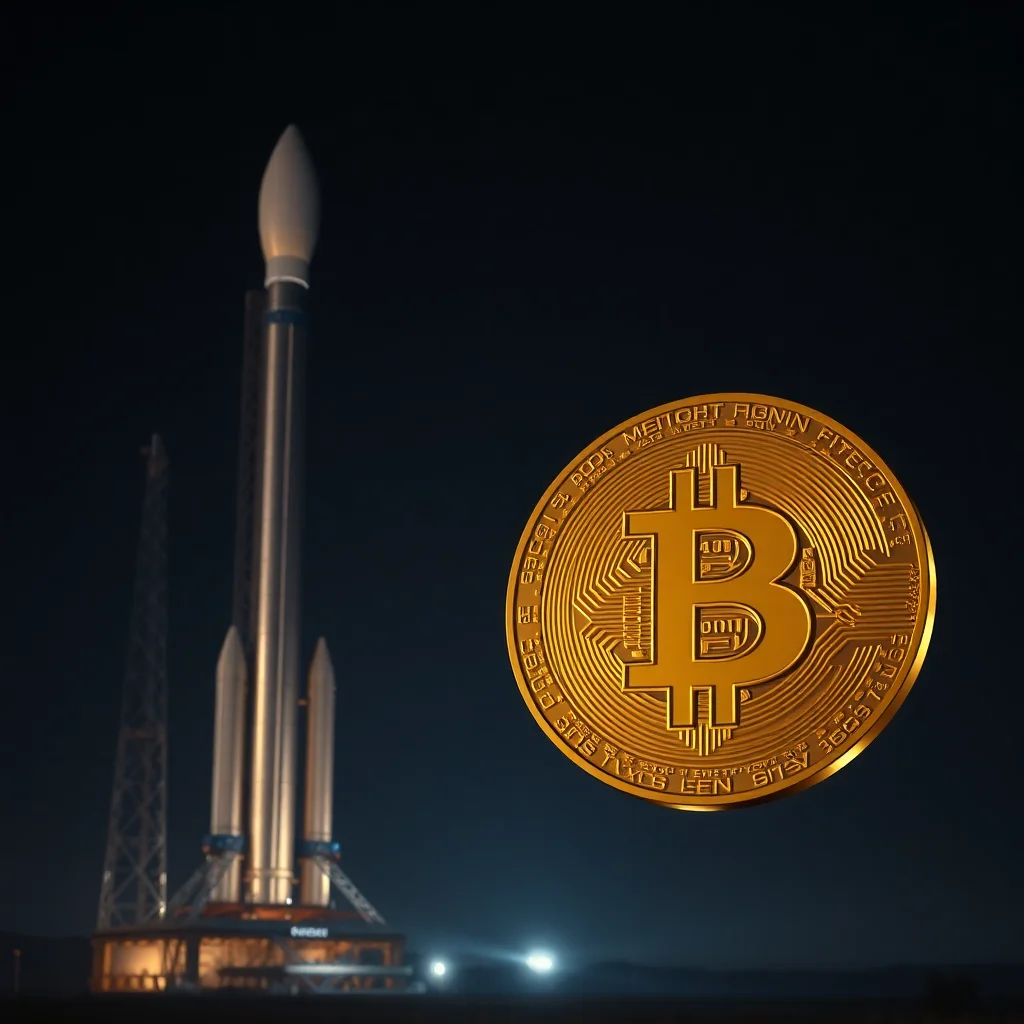
SpaceX's anticipated entry into public markets has sent ripples through both the aerospace and cryptocurrency sectors after the company disclosed substantial Bitcoin holdings in its IPO filing. The revelation that Elon Musk's space exploration company holds 18,712 BTC—worth approximately $1.45 billion at current valuations—represents a watershed moment for corporate cryptocurrency adoption and positions SpaceX among the most significant institutional Bitcoin holders globally.
The filing, which revealed SpaceX's intention to list on Nasdaq, marks not just a historic milestone for the aerospace industry but also underscores the growing mainstream acceptance of Bitcoin as a legitimate treasury asset for major corporations. This disclosure comes at a time when institutional adoption of digital assets continues to accelerate, with companies increasingly allocating portions of their balance sheets to cryptocurrencies as a hedge against inflation and currency debasement.
SpaceX's Bitcoin Holdings: A Corporate Statement
The 18,712 BTC holdings revealed in SpaceX's IPO documentation represent far more than a simple financial asset on the company's balance sheet. For a privately-held corporation that has revolutionized the aerospace industry through reusable rocket technology, the decision to accumulate and hold such substantial Bitcoin quantities signals confidence in digital assets' long-term value proposition. This treasury position places SpaceX among an elite tier of corporate Bitcoin holders, competing for prominence alongside companies like MicroStrategy, Tesla, and Square (Block).
The timing of this disclosure is particularly noteworthy. SpaceX has built its reputation on forward-thinking technological solutions and long-term vision—qualities that extend naturally to strategic asset allocation. The company's Bitcoin treasury appears consistent with its broader philosophy of embracing innovative technologies that challenge traditional paradigms. Whether accumulated through direct purchases, client payments, or strategic decisions by leadership remains unclear from public filings, but the holdings underscore SpaceX's commitment to diversifying its asset base beyond traditional corporate treasury instruments.
Implications for Corporate Cryptocurrency Adoption
SpaceX's substantial Bitcoin holdings represent another significant step in the evolution of institutional cryptocurrency adoption. The aerospace sector has historically maintained conservative financial practices, making SpaceX's position in Bitcoin particularly significant. This development demonstrates that major companies operating in capital-intensive, mission-critical industries are increasingly comfortable allocating corporate resources to digital assets.
The trajectory of corporate Bitcoin adoption has accelerated notably since 2020, when MicroStrategy became one of the first major corporations to make substantial Bitcoin purchases as part of its treasury strategy. Since then, a growing roster of companies has followed, creating a competitive advantage dynamic where firms fear being left behind in the digital asset revolution. SpaceX's holdings suggest this trend shows no signs of slowing:
- Treasury Diversification: Companies are reconsidering traditional cash reserves and bonds, seeking alternatives that protect against monetary debasement and inflation
- Institutional Legitimacy: Corporate Bitcoin holdings normalize digital assets within traditional business finance, attracting additional institutional investors
- Competitive Positioning: Firms worry about shareholder pressure and competitive disadvantage if peers accumulate substantial cryptocurrency reserves while they abstain
- Long-term Value Thesis: Leadership increasingly views Bitcoin's supply-limited characteristics as valuable in an era of unprecedented monetary expansion
- Talent Attraction: Corporate Bitcoin positions appeal to technology-focused employees and signal innovation-oriented company culture
IPO Timing and Market Dynamics
SpaceX's IPO filing arrives during a period of significant momentum in both aerospace innovation and Bitcoin adoption. The company's decision to go public represents a major financial event, and the revelation of its Bitcoin holdings immediately became a focal point for market analysis. This timing offers several important considerations for understanding the broader market context.
The aerospace sector has attracted considerable investor attention in recent years, driven by the commercial space economy's explosive growth potential. SpaceX's Starship development, Starlink satellite constellation expansion, and continued innovation in reusable rocket technology have positioned the company as a transformative force in space exploration and satellite communications. Going public allows SpaceX to access public capital markets while maintaining significant control through multiple voting classes of shares—a structure that mirrors approaches used by technology companies rather than traditional aerospace contractors.
The Bitcoin treasury disclosure adds an additional dimension to SpaceX's investment thesis. Investors analyzing the company's financial position will now factor in the digital asset holdings as both a balance sheet asset and a potential indicator of management's strategic vision. This integration of cryptocurrency holdings into mainstream corporate IPO documentation represents a normalization of digital assets in institutional finance.
Regulatory and Market Considerations
SpaceX's IPO filing with Bitcoin holdings disclosed prominently raises important regulatory and accounting questions. Securities regulators and accounting standards boards have increasingly focused on how corporations should classify, value, and report cryptocurrency holdings. SpaceX's public disclosure of specific BTC quantities and estimated valuations provides transparency that many institutional investors demand, though the methodology for determining the $1.45 billion valuation warrants careful examination.
The regulatory environment surrounding corporate cryptocurrency holdings remains in flux, but SpaceX's significant position suggests the company has navigated compliance requirements successfully. As more major corporations disclose substantial Bitcoin holdings, regulatory frameworks will likely continue evolving to address classification, valuation methodologies, and disclosure standards. SpaceX's filing may serve as a reference point for how publicly-traded companies should handle cryptocurrency treasury positions.
The Broader Signal for Digital Asset Adoption
Beyond the specific financial metrics, SpaceX's Bitcoin holdings and IPO disclosure send a powerful signal about digital assets' trajectory within institutional finance. When one of the world's most forward-thinking companies—one that literally launches rockets into space—simultaneously maintains substantial Bitcoin reserves, it validates the digital asset's importance to serious business strategists and investment professionals.
This development comes amid broader institutional adoption trends, including spot Bitcoin ETF approvals, increasing corporate treasury allocations, and rising academic recognition of cryptocurrency as legitimate asset class. SpaceX's position in this landscape is significant not just because of the dollar amount involved, but because of what it represents: a major, privately-held corporation operating in a traditional industry has concluded that Bitcoin merits a prominent position in its financial strategy.
As SpaceX moves toward its historic IPO, investors and market observers will scrutinize how the company's Bitcoin holdings perform relative to traditional corporate assets. This high-profile case study will likely influence other major corporations considering their own digital asset allocation strategies, potentially accelerating the trend of substantial corporate Bitcoin treasury positions.
This article was last reviewed and updated in May 2026.