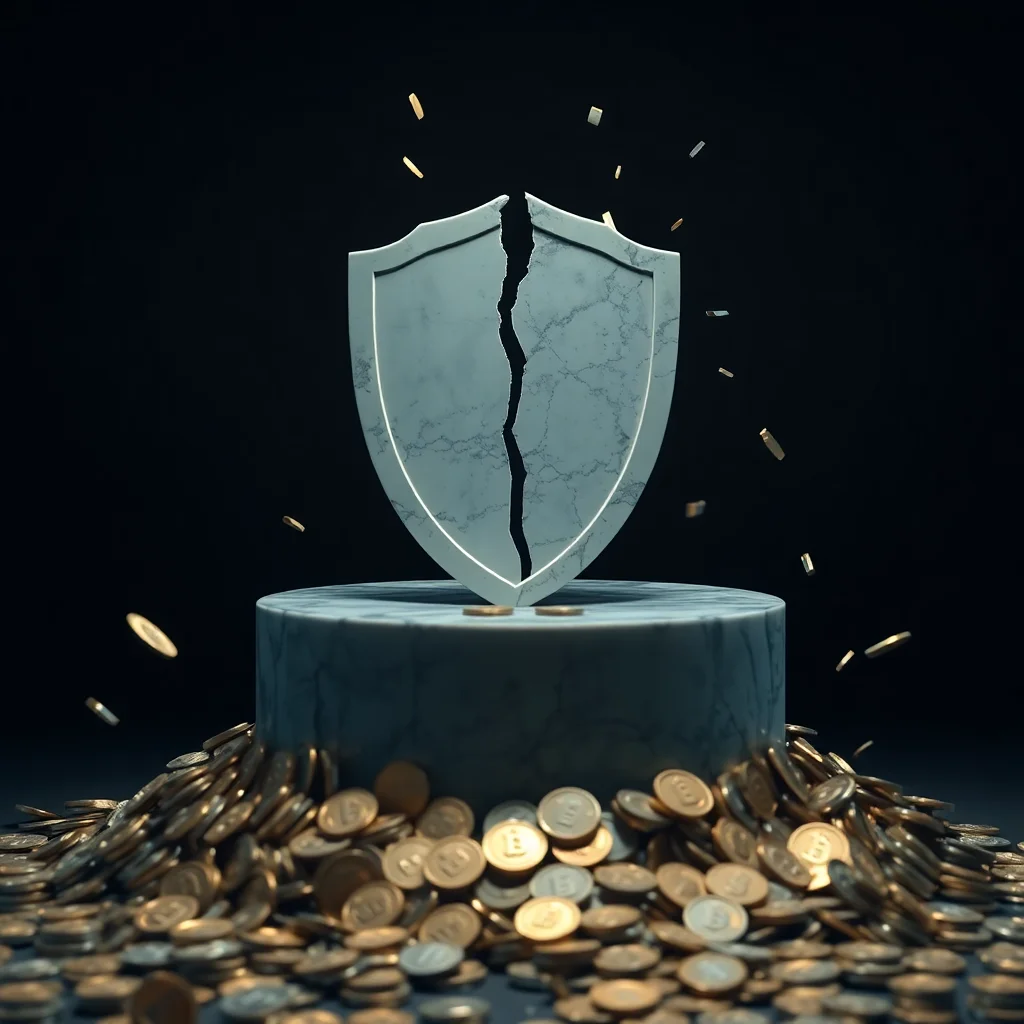
The privacy coin sector experienced a significant shock this week as Zcash (ZEC) faced a dramatic price decline following the disclosure of a serious vulnerability affecting the cryptocurrency's network. The sudden downturn wiped billions from Zcash's market capitalization, reigniting concerns about the security and long-term viability of privacy-focused digital assets. As market participants reassess their positions, critical questions emerge about whether Zcash can recover from this setback and maintain investor confidence in its protocol.
Understanding the Vulnerability and Its Impact
The vulnerability disclosed in Zcash's network represents a significant technical issue that prompted immediate market reaction. Privacy coins operate in an already-contested regulatory and market environment, where trust in the underlying protocol's security is paramount. When vulnerabilities emerge, they don't just pose technical risks—they undermine the fundamental value proposition that attracts investors to privacy-focused cryptocurrencies in the first place.
The nature of the vulnerability and the disclosure process itself influenced how severely the market reacted. Transparent communication about security issues can sometimes be viewed positively by the community, as it demonstrates commitment to addressing problems. However, the scale of this particular issue appears to have overwhelmed those considerations, resulting in substantial selling pressure across exchanges. The initial price drop was steep, with ZEC trading down significantly from pre-disclosure levels.
Market Cap Implications and Investor Sentiment Shift
The crash directly impacted Zcash's market capitalization, erasing billions in value within a relatively short timeframe. This wasn't merely a percentage-point decline—the magnitude of the loss reflected a fundamental reassessment by the market of the asset's risk profile. When vulnerabilities in privacy coins surface, investors often question whether similar issues might exist in other projects within the category, leading to broader sector-wide concerns.
Key factors affecting investor sentiment include:
- Loss of confidence in the development team's ability to identify and prevent security issues proactively
- Increased regulatory scrutiny that often follows security vulnerabilities in privacy tools
- Competitive pressure from other privacy-focused projects that haven't experienced comparable incidents
- Uncertainty about the timeline and effectiveness of remediation efforts
- Broader market conditions and macroeconomic factors influencing risk asset valuations
The speed at which capital left the ZEC market suggested that many holders viewed the vulnerability as a sufficient reason to reduce exposure, regardless of the development team's remediation plans.
Technical Response and Recovery Efforts
Following disclosure, the Zcash development team and community moved to address the vulnerability through standard protocol security procedures. The response timeline—how quickly fixes were deployed, tested, and implemented across the network—would be critical to restoring investor confidence. Cryptocurrency communities often rally around projects during crises when developers demonstrate competence and transparency.
The technical aspects of the fix matter significantly. If the remediation involved a straightforward patch that could be quickly deployed without major network disruption, recovery might proceed faster than if the solution required more complex changes. Additionally, security audits conducted after implementation would be essential to verify that the fix was comprehensive and didn't introduce new vulnerabilities.
The broader question facing the Zcash ecosystem involves demonstrating that this was an isolated incident rather than indicative of deeper structural issues in the protocol's security architecture. This requires not just fixing the immediate problem but also implementing enhanced security protocols and audit procedures going forward.
Competitive Positioning in the Privacy Coin Space
Zcash operates within a competitive landscape that includes other privacy-focused projects such as Monero, which has maintained different privacy mechanisms and development approaches. The vulnerability created an opportunity for competing projects to differentiate themselves by emphasizing their own security records and development practices. Market participants considering reallocating privacy coin exposure might shift capital toward alternatives perceived as lower-risk.
The incident also highlights ongoing challenges in the privacy coin sector broadly. Regulatory pressure on privacy-enhancing technologies has been increasing, and security vulnerabilities provide additional justification for stricter oversight. Zcash's position as a relatively prominent privacy coin with legitimate use cases (despite regulatory headwinds) means that its recovery trajectory could influence market perceptions of the entire category.
Can ZEC Recover? Timeline and Realistic Expectations
Recovery from a major security incident depends on multiple interconnected factors. The immediate price recovery typically follows technical remediation, as investors see confirmation that the vulnerability has been addressed. However, returning to pre-vulnerability valuations requires restoring broader confidence in the project's long-term security and viability.
Realistic timelines for recovery might span months or longer, as the market processes the incident and evaluates its implications. Short-term recovery could occur if technical fixes are swiftly implemented and independently verified as effective. Medium-term recovery would depend on the Zcash team demonstrating enhanced security practices and the market accepting that this was an anomalous event. Long-term recovery would require the project to maintain its security standards while advancing its development roadmap and adapting to the evolving regulatory environment.
However, complete recovery to pre-incident market capitalizations may depend on factors beyond the Zcash team's direct control. Broader cryptocurrency market conditions, regulatory developments affecting privacy coins, and investor preference shifts could all influence whether ZEC regains its previous valuation levels.
For investors and network participants, the priority is ensuring that Zcash's development team implements comprehensive security improvements that prevent similar vulnerabilities from emerging. While short-term price recovery might occur quickly if market sentiment shifts positively, establishing genuine long-term confidence requires demonstrable progress on security and protocol resilience. The coming weeks and months will be crucial in determining whether Zcash successfully rebuilds trust or faces a sustained decline in its market position within the privacy coin ecosystem.
This article was last reviewed and updated in June 2026.