The Hardware Journey: From Laptops to Industrial ASICs
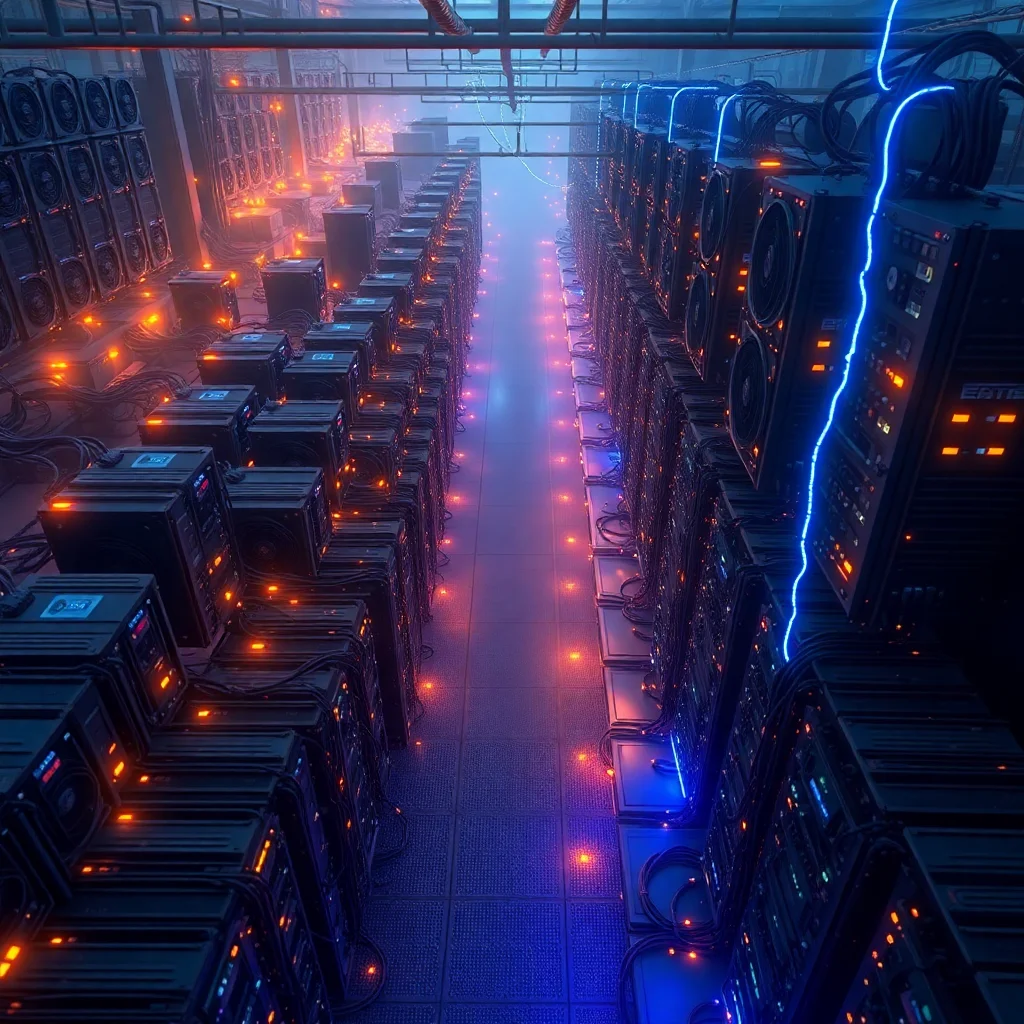
The evolution of Bitcoin mining has completed its transformation from a fringe hobbyist experiment into a cornerstone of global industrial utility. Over fifteen years, the network migrated from residential CPUs to massive, specialized data centers that now serve as grid-balancing assets.
This journey is defined by a brutal efficiency paradox: as total network power surges toward the Zettahash milestone, individual profit margins are being crushed by hardware limits and rising energy costs. In 2026, the industry has reached a point of infrastructure cannibalization — the very facilities built to secure the blockchain are being repurposed to fuel the global hunger for Artificial Intelligence.
| Era | Technology | Period | Profitability |
|---|---|---|---|
| Genesis | CPU | 2009–2010 | Very High (home laptops) |
| Acceleration | GPU | 2010–2012 | High (consumer GPUs) |
| Transition | FPGA | 2012–2013 | Moderate |
| Industrialization | First Gen ASIC | 2013–2018 | Moderate to Low |
| Professionalization | Advanced ASIC (7nm–5nm) | 2018–2024 | Very Low (industrial only) |
| Integration | Industrial ASIC + AI | 2025+ | Scale-dependent |
The Efficiency Wall
The transition from 14nm to 7nm chips was a breakthrough in performance-to-power ratios. The Bitmain Antminer S9 (2017) established the industrial standard at 98 J/TH with 14 TH/s hashrate. The S19j Pro (2021) improved to 30 J/TH, while the S21 (2025) pushed toward 15 J/TH.
But as chips approach 3nm, gains are harder to extract. Deployment costs for cutting-edge hardware are exponentially higher, yielding only 20–30% performance improvements compared to the thousand-fold leaps of the early 2010s. The industry has hit a physical wall.
The Mathematics of Scarcity: Difficulty and Halving
Bitcoin maintains its 10-minute block time through Network Difficulty — a dynamic adjustment mechanism that recalibrates every 2,016 blocks (approximately 14 days).
In 2009, difficulty was 1. By mid-2025, it surpassed 84 trillion — an 84-trillion-fold increase in the computational effort required to find a block.
The 2024 Halving and Zettahash Milestone
In early 2026, the network reached a historic milestone: total hashpower surpassed 1 ZH/s (Zettahash per second). This surge occurred despite the April 2024 reward reduction to 3.125 BTC, creating a post-halving normalization pattern:
- Pre-halving acceleration: Miners ramped up hashrate 3–6 months before the cut, racing to capture the 6.25 BTC reward
- Liquidation threshold: Post-halving, operators using older S19 hardware faced insolvency if electricity costs exceeded $0.05/kWh
- Survival filter: Only miners with renewable energy access or secondary revenue streams remained profitable
The 2026 Profitability Crisis and AI Pivot
By 2026, the mining sector faced a survival crisis. For major public firms, the all-in cost to mine a single Bitcoin (including capital expenditure, depreciation, and operations) far exceeded market price. The response: repurposing mining data centers for AI and High-Performance Computing.
| Company | All-in Cost ($/BTC) | Market Price | Strategic Response |
|---|---|---|---|
| RIOT Platforms | $170,366 | ~$70,000 | Building 1GW site for AI/HPC |
| MARA Holdings | $153,040 | ~$70,000 | Selling BTC reserves for Nvidia GPUs |
| Core Scientific | $168,693 | ~$70,000 | 12-year AI hosting contract |
| TeraWulf | $471,841 | ~$70,000 | 39% revenue now from AI |
The economics are clear: AI workloads generate 2 to 5 times more revenue per kilowatt-hour than Bitcoin mining. Regulatory pressure compounds the problem — in Texas, legislation has stripped miners of priority consumer status, allowing the grid operator to remotely shut down mining rigs during peak demand.
The Hybrid Infrastructure Model
The emerging strategy treats Bitcoin mining as a base-load utility while AI serves as the primary profit engine. Mining absorbs excess renewable energy during low-demand periods, while AI workloads generate consistent high-margin revenue.
The primary value of a mining firm is no longer the BTC in its vault but its long-term power contracts and grid integration status. Power Purchase Agreements have become the most valuable asset on the balance sheet.
Environmental Footprint
Bitcoin mining accounts for approximately 0.1% of global CO2 emissions (~48 MtCO2e), comparable to small nations. Beyond carbon, the industry generates significant e-waste as hardware becomes obsolete every 2–3 years, and cooling systems create water consumption concerns.
| Environmental Risk | Mitigation Strategy |
|---|---|
| Carbon footprint | Direct solar and wind coupling |
| E-waste from obsolete ASICs | Repurposing for heating applications |
| Water consumption for cooling | Closed-loop immersion cooling systems |
| Heat waste (99% of energy) | Circular economy: greenhouses, district heating |
What This Means for Individual Miners
Solo mining Bitcoin in 2026 is no longer viable. The economics are brutal: even with the latest S21 hardware and electricity at $0.05/kWh, solo miners compete against industrial operations with access to sub-$0.03/kWh renewable energy and multi-megawatt scale.
For individuals still interested in mining:
- Consider altcoins: Monero (XMR) and Kaspa (KAS) remain CPU/GPU-mineable. Our Mining Calculator can help estimate profitability
- Join mining pools: Pool mining distributes rewards proportionally, providing more predictable income
- Look at hosting services: Colocation facilities offer industrial electricity rates without the infrastructure investment
- Consider staking: Proof-of-Stake networks like Ethereum offer yields without hardware investment
The Road to 2028: Survival Thresholds
The next halving in 2028 will reduce the block reward to 1.5625 BTC. For the current mining infrastructure to remain solvent, Bitcoin must reach and sustain a price of approximately $100,000. Below that threshold, independent mining operations will be absorbed by tech companies that view mining facilities as pre-built shells for AI data centers.
The industry is no longer a collection of miners — it's a consolidated infrastructure utility. Survival depends on three factors:
- Power contracts: Long-term agreements at sub-$0.03/kWh are now the primary competitive advantage
- Revenue diversification: Firms must derive 50–70% of revenue from non-crypto sources (AI/HPC) to survive crypto winters
- Operational efficiency: With 3nm hardware gains plateauing, profit comes from uptime optimization and heat recycling, not chip speed
The facilities built to secure the Bitcoin blockchain are becoming the backbone of the AI economy. Whether that's a threat to Bitcoin's decentralization or a necessary evolution remains the defining question of this era.
Frequently Asked Questions
Is Bitcoin mining still profitable in 2026?
For individuals, solo Bitcoin mining is no longer profitable. Industrial operations require sub-$0.05/kWh electricity and latest-generation hardware to break even. Many large mining companies have pivoted to AI hosting as their primary revenue source, using Bitcoin mining only during periods of excess energy.
What happened after the 2024 Bitcoin halving?
The April 2024 halving reduced block rewards from 6.25 to 3.125 BTC. This triggered a profitability crisis where major public miners saw all-in costs exceed $150,000 per BTC against a ~$70,000 market price. Many firms began repurposing data centers for AI workloads.
Can you still mine Bitcoin with a GPU?
No. GPU mining for Bitcoin has been impractical since 2013 when ASICs took over. However, some cryptocurrencies like Monero (RandomX algorithm) and Kaspa are still designed for GPU or CPU mining.
Why are Bitcoin miners switching to AI?
AI workloads generate 2-5x more revenue per kilowatt-hour than Bitcoin mining. Mining companies already have the infrastructure — power contracts, cooling systems, and data center space — that AI companies need. The pivot allows miners to monetize their facilities more profitably.
When is the next Bitcoin halving?
The next halving is expected in April 2028, reducing the block reward from 3.125 to 1.5625 BTC. Analysts estimate Bitcoin needs to sustain above $100,000 for current mining operations to remain viable after the halving.
This article was last reviewed and updated in April 2026.