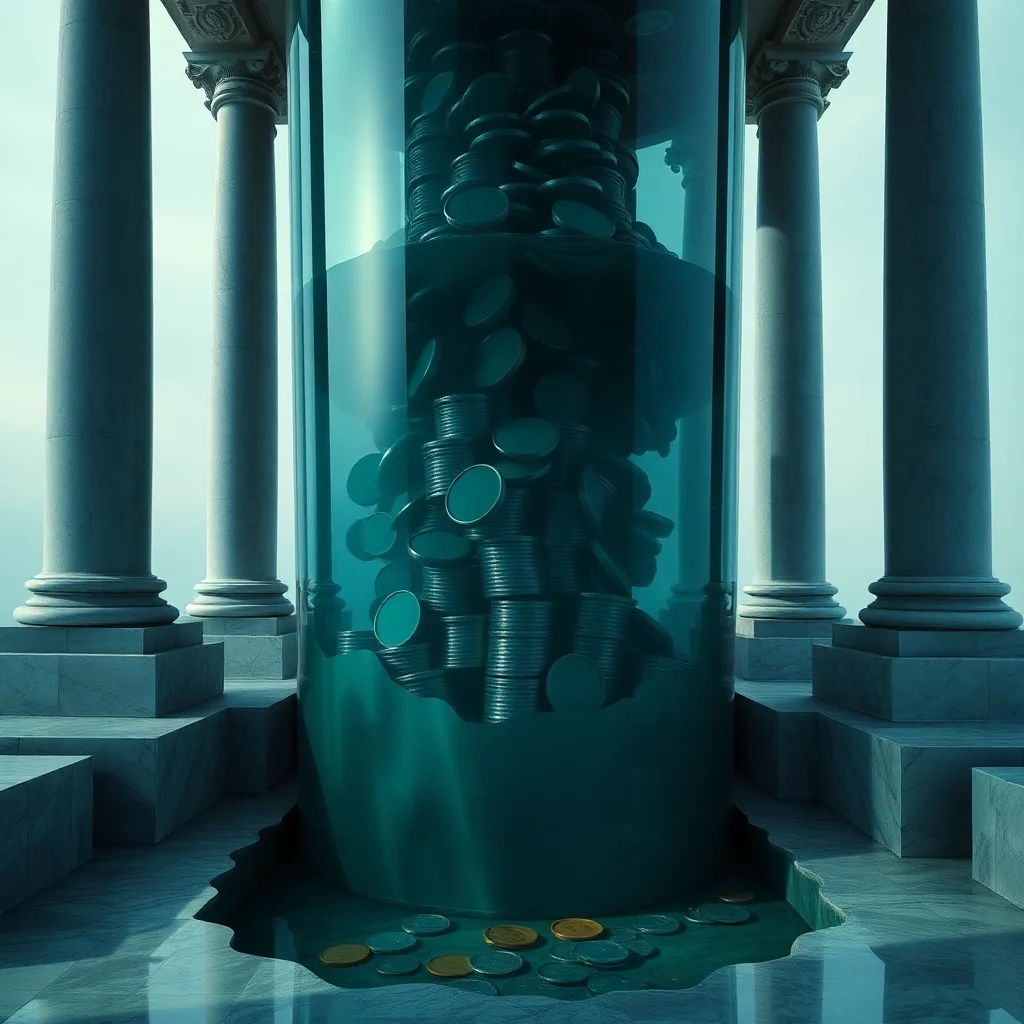
World Liberty Financial (WLF), a decentralized finance platform that has garnered significant attention and investment, is now facing serious scrutiny following revelations that the project allegedly borrowed $75 million using illiquid tokens as collateral. The allegations have sparked comparisons to the Terra/Luna collapse of 2022, one of the most devastating implosions in cryptocurrency history. Market participants are bracing for potential downside pressure on the WLFI token, with some analysts projecting a possible 20% decline as confidence erodes among traders and investors.
The Illiquid Collateral Problem
At the heart of the current crisis is World Liberty Financial's apparent reliance on illiquid tokens to secure substantial debt financing. This practice represents a fundamental risk management failure that echoes the strategies employed by failed crypto projects in the past. When a platform borrows against illiquid assets—tokens that cannot be easily sold or traded without significant price impact—it creates a precarious situation where market downturns can trigger cascading liquidations.
The $75 million borrowing arrangement raises critical questions about the sustainability of WLF's operations and the underlying assets supporting its token ecosystem. Illiquid collateral is particularly dangerous in volatile crypto markets, where rapid price movements can quickly erode the value of pledged assets. This scenario forces platforms into difficult choices: either inject additional capital to maintain collateral ratios, or face forced liquidations that further destabilize the ecosystem.
Echoes of the LUNA Catastrophe
The comparison to Terra/Luna is not coincidental. Terra's algorithmic stablecoin UST and its sister token LUNA collapsed spectacularly in May 2022, resulting in approximately $40 billion in losses and devastating retail investors worldwide. The collapse occurred because UST's peg to the U.S. dollar depended on circular economic incentives and unsustainable yield mechanisms rather than genuine value generation.
The 'LUNA 2.0' allegations against World Liberty Financial suggest similar structural vulnerabilities:
- Unsustainable debt structures: Relying on illiquid collateral to finance operations creates a house-of-cards dynamic where one market shock can trigger total system failure
- Confidence dependency: Like Luna, WLF's token value may depend heavily on sustained confidence rather than fundamental value, making it vulnerable to sentiment shifts
- Opacity concerns: The revelation of massive borrowing using questionable collateral suggests insufficient transparency with the community
- Cascade risk: If WLF faces liquidation, the selling pressure on its illiquid collateral could create additional damage to other projects holding similar assets
Market Impact and Token Pressure
The WLFI token has already begun experiencing selling pressure as traders digest the implications of these allegations. The projected 20% decline reflects rational market behavior when fundamental doubts emerge about a project's solvency. In cryptocurrency markets, perception becomes reality quickly—once confidence erodes, recovery becomes exponentially more difficult.
Several factors amplify the downward pressure on WLFI:
Liquidity dynamics: If WLF needs to liquidate positions to meet debt obligations, forced selling will create negative price pressure. Token holders will face the prospect of massive dilution or direct losses depending on how the situation resolves.
Institutional withdrawal: Sophisticated investors and institutions typically exit positions at the first sign of structural vulnerability. Their departure removes buy-side support that smaller retail investors depend upon for price stability.
Contagion effects: If WLF's illiquid collateral includes tokens from other projects, liquidations could spread damage across the broader DeFi ecosystem, creating systemic concerns beyond WLF itself.
Debt Sustainability and Bad Debt Fears
The core issue fueling market anxiety is whether World Liberty Financial can service its $75 million debt obligation sustainably. Bad debt fears represent the existential threat to the project. When a protocol's debt grows faster than its revenue-generating capacity, a debt spiral becomes inevitable unless external capital infusions occur.
Several scenarios could unfold:
Scenario one—capital injection: WLF leadership injects substantial capital to secure the collateral position and maintain confidence. This would be dilutive to existing token holders but could stabilize the situation short-term.
Scenario two—restructuring: The platform negotiates debt restructuring with creditors, potentially converting debt to equity or extending repayment timelines. This would hurt token holders through dilution.
Scenario three—failure: The platform cannot raise sufficient capital and faces liquidation. In this scenario, token holders face near-total losses.
Regulatory and Reputational Fallout
Beyond immediate market mechanics, World Liberty Financial faces significant regulatory and reputational damage. Cryptocurrency regulators globally have become increasingly sophisticated at identifying structural risks and fraudulent practices. A project using illiquid tokens as collateral for massive borrowing may trigger regulatory investigations in multiple jurisdictions.
The reputational damage extends to any prominent figures associated with WLF. In cryptocurrency, individual leaders and projects become inextricably linked in investor minds. Negative associations spread rapidly through social media and community channels, making rehabilitation difficult even if underlying issues are eventually resolved.
The project's ability to raise future capital, attract talent, or build partnerships has been substantially compromised by these allegations. Trust, once lost in cryptocurrency, is extraordinarily difficult to rebuild.
What This Means for Investors
For WLFI token holders, these developments represent a critical decision point. The 20% projected decline may materialize, but greater losses are possible if the situation deteriorates further. Historical precedent suggests that projects facing similar allegations rarely recover their previous valuation levels, even if they survive structurally.
The situation serves as a sobering reminder of fundamental DeFi risks. Platforms built on unsustainable collateral structures, circular incentive mechanisms, or insufficient transparency remain vulnerable regardless of their market capitalization or community size. Due diligence on collateral quality, debt sustainability, and management transparency should remain paramount concerns for any cryptocurrency investment.
As the situation develops, market participants should monitor official statements from World Liberty Financial, actions taken to address the collateral crisis, and broader market reactions. The coming days and weeks will likely prove decisive for the project's long-term viability.
This article was last reviewed and updated in May 2026.