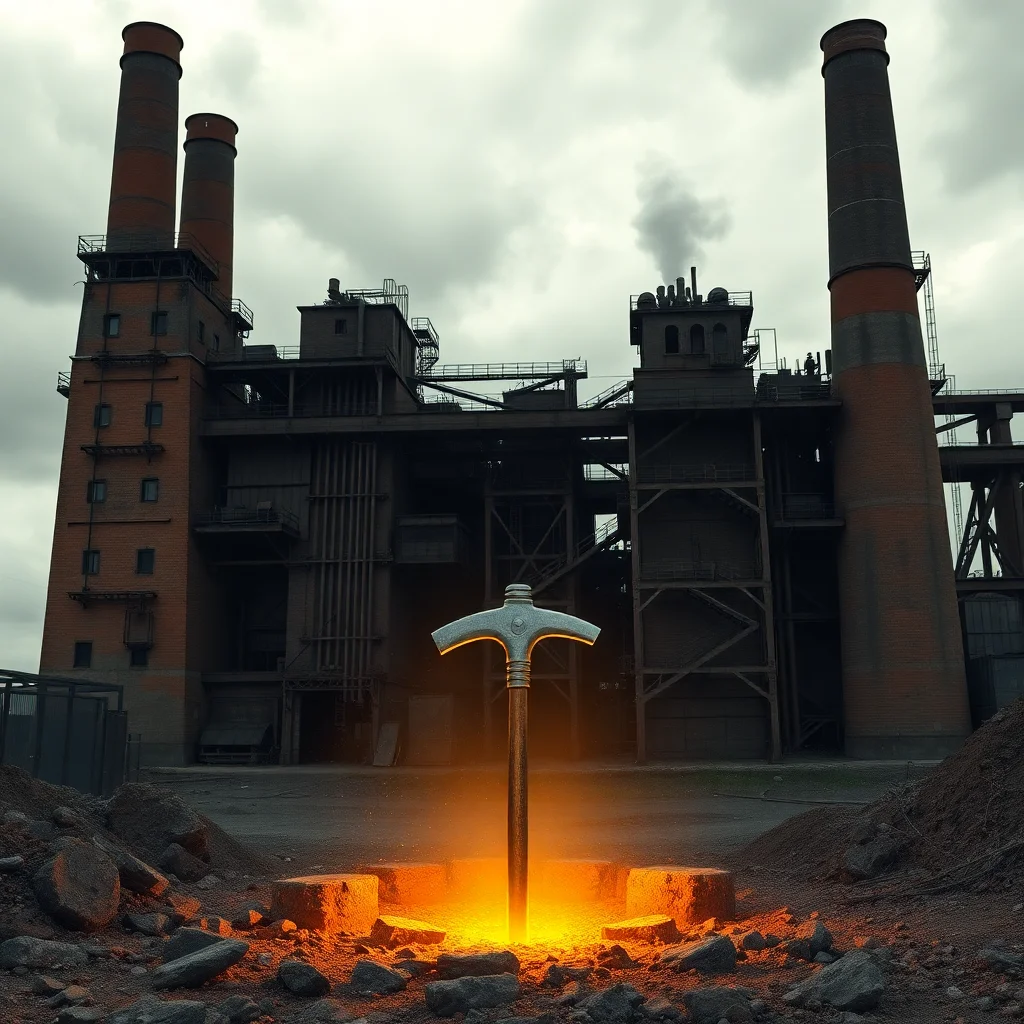
In a move that underscores the growing intersection of traditional industrial infrastructure and cryptocurrency mining, aluminum production giant Alcoa is nearing a deal to sell its dormant Massena East smelter facility in upstate New York to NYDIG, a major Bitcoin mining and digital assets company. The transaction represents a broader trend in which underutilized American manufacturing facilities are being repurposed to support cryptocurrency operations and artificial intelligence data centers, fundamentally reshaping how industrial real estate is being utilized in the post-pandemic economy.
The Alcoa-NYDIG Deal: A Strategic Pivot for Idle Industrial Capacity
According to reports, Alcoa Corporation is in advanced negotiations to transfer ownership of its Massena East smelter to NYDIG, a subsidiary of Stone Ridge Asset Management that has emerged as one of North America's largest Bitcoin mining operations. The Massena facility, located in the heart of New York's North Country region, has sat largely idle as Alcoa shifted its global operations and adjusted to changing market conditions in the aluminum industry.
The proposed transaction is particularly notable because it demonstrates how companies with stranded industrial assets are finding new economic value in Bitcoin mining operations. Rather than allowing expensive, purpose-built facilities to remain dormant, facility owners are increasingly recognizing that these same plants—particularly those with access to reliable power infrastructure—can be efficiently adapted for cryptocurrency mining purposes. The Massena location offers several advantages for such an operation, including established electrical infrastructure originally designed to support energy-intensive aluminum smelting.
Industrial Repurposing and the Energy Infrastructure Advantage
One of the primary reasons why former industrial manufacturing plants are attractive to Bitcoin miners like NYDIG relates to their existing electrical infrastructure. Aluminum smelting is among the most energy-intensive industrial processes, requiring massive amounts of reliable electrical power. Facilities like Alcoa's Massena East were built with heavy-duty power delivery systems, transformers, and distribution networks capable of supporting continuous high-load operations.
Bitcoin mining operations share this fundamental requirement: they need substantial, stable electrical supply to operate their computing infrastructure profitably. The economics of mining are heavily influenced by electricity costs, making locations with existing, robust power infrastructure significantly more valuable than starting from scratch. This alignment of needs explains why industrial sites in regions with access to relatively affordable power—such as upstate New York, which benefits from hydroelectric generation—are increasingly attractive targets for mining companies.
Key advantages of repurposing industrial sites for mining include:
- Existing electrical infrastructure rated for high-capacity loads
- Established utility relationships and power supply agreements
- Purpose-built buildings with cooling capabilities
- Developed transportation and logistics networks
- Regional familiarity with industrial operations
- Potential tax incentives for revitalizing dormant facilities
The Broader Trend of Industrial Real Estate Transformation
The Alcoa-NYDIG transaction is not an isolated occurrence but rather part of a larger wave of industrial real estate conversions happening across North America. As traditional manufacturing has declined or consolidated, and as cryptocurrency mining has matured into a legitimate industrial operation with significant capital requirements, an unprecedented opportunity has emerged to match idle capacity with new demand.
This transformation affects multiple regions that historically depended on energy-intensive industries. Areas in Texas, Montana, Idaho, and upstate New York—regions that developed industrial infrastructure around aluminum smelting, steel production, or other power-hungry manufacturing—are now repositioning themselves as mining hubs. Companies like NYDIG, Argo Blockchain, Core Scientific, and others have recognized this opportunity and are actively acquiring or leasing such facilities.
The competition for these assets is intensifying as Bitcoin mining becomes more institutionalized and as larger financial players enter the space. NYDIG's interest in the Alcoa facility reflects both the company's growth ambitions and the scarcity value of readily available, large-scale industrial infrastructure.
NYDIG's Strategic Position in the Mining Landscape
NYDIG has positioned itself as one of the most sophisticated players in North American Bitcoin mining. The company combines operational expertise in cryptocurrency with access to capital and business relationships cultivated through its parent company, Stone Ridge Asset Management. This combination of mining know-how and financial resources has enabled NYDIG to pursue acquisitions and development projects on a scale that distinguishes it from many competitors.
Acquiring a facility like the Alcoa Massena East smelter would represent a significant expansion of NYDIG's operational capacity. The deal, if completed, would add considerable hashrate to the company's network and enhance its position as a major contributor to Bitcoin network security. For a company focused on becoming a vertically integrated player in the Bitcoin ecosystem, ownership of physical mining infrastructure is a critical component of long-term strategy.
Implications for Local Communities and Energy Markets
The repurposing of industrial facilities for Bitcoin mining carries implications that extend beyond the companies involved. For communities in regions like Massena, New York, industrial facility reactivation represents potential job creation, renewed property tax revenue, and economic stimulus. The Massena region, like many upstate New York communities, has experienced economic challenges as traditional industries have contracted, making the prospect of facility reactivation economically significant.
However, the transition from traditional manufacturing to mining operations does raise considerations regarding employment patterns, as mining operations typically require fewer workers than manufacturing facilities once did. While the facility's reactivation represents economic benefit, the nature of that benefit—in terms of direct employment—may differ from the aluminum smelting operations that previously occupied the site.
From an energy market perspective, large-scale mining operations can have meaningful impacts on regional power consumption and grid dynamics. Operators like NYDIG are increasingly focused on utilizing renewable energy sources and working within local grid constraints, but the concentrated power demand of mining facilities remains a factor in energy market planning.
The Alcoa-NYDIG transaction exemplifies the dynamic restructuring of American industrial capacity in response to technological and economic change. As traditional heavy manufacturing continues to evolve, Bitcoin mining and cryptocurrency infrastructure represent a significant new source of demand for existing industrial assets. This trend will likely continue reshaping regional economies and infrastructure utilization patterns across North America for years to come.
This article was last reviewed and updated in May 2026.